






Accelerating to Net Zero, a strategic dialogue series
In 2018, the International Maritime Organization, IMO, set out to halve greenhouse gas emissions by 2050. “By now, I think there is a broad consensus and commitment across the industry to fully decarbonize,” says Rofka. “There is a common understanding that towards 2050, it’s all about e-fuels.”
The fuel investment dilemma
Engines can already burn e-fuels, but shipping alone cannot fund their large-scale production. “The industry fails to stimulate investments to produce these fuels. That’s the dilemma.”
Affordable e-fuels require scale, renewable energy, and water. “We will most likely see hubs where nation-scale production takes place, and they are not necessarily located on trading routes. So, we will see a change in the landscape of production and the role of individual ports.”
Carbon capture will play two roles: “At least two out of three future prominent e-fuels, LNG and methanol, still require carbon. Either it comes from biomass or it comes from carbon capture.” Onboard, it can act as “a bridge to the time when e-fuels are available” for vessels with no alternative to fossil fuel – creating a trade in captured CO2 in which ports will be critical nodes.
Orchestrating e-fuel supply
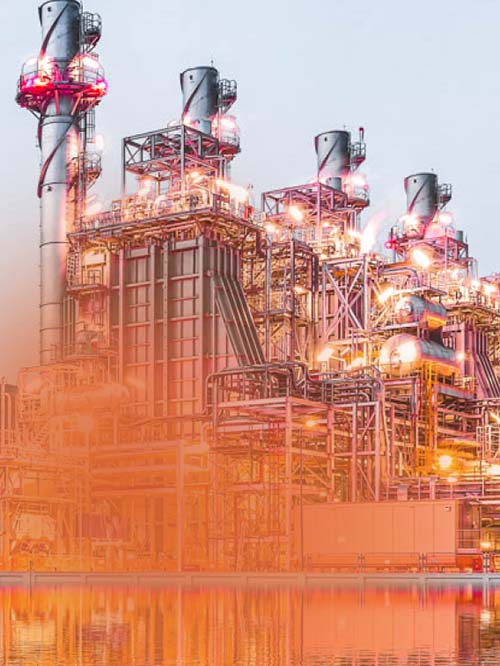
Ports can anchor cross-industry fuel strategies, linking shipping to grids, pipelines, and storage shared with aviation, steel, power, and agriculture – though not all in the same way. Geography and resources will define four archetypes: producers make e-fuels locally, connectors distribute them via pipelines and clusters, receivers import at scale, and sources export from renewable-rich hydrogen hubs. Early movers will gain new market opportunities and widen fleet access to e-fuels, preserving shipping’s flexibility.
Fixing a future fuel strategy
“Ports have to invest in storing, in bunkering, in treating these new fuels. Which fuel shall they go for? They have to make this decision, and often then they wait for the others, so nothing is happening.”
“The future fuels will not only be fuels, they will be commodities for other industries, and ports can position themselves strategically in a new way, and if possible, also in a coordinated way. This will bring confidence and planning security for the rest of the industry.”
Through aggregation models, financing, and coordinated trade agreements, ports can lower risk, mobilize capital, and build shared value chains for green hydrogen, e-ammonia, e-methanol, and carbon capture. Their role is essential, Rofka concludes.
“Shipping needs to decarbonize. There’s no question about that. We owe it to our next generation.”
Why is the big picture (public/industry-wide) problem a challenge and for whom?
The maritime industry broadly agrees that e-fuels are the route to full decarbonization by 2050, and today's propulsion systems can largely burn them. But the investment needed to produce e-fuels at scale is far bigger than shipping can make on its own. Affordable e-fuels will come from nation-scale hubs with access to renewable energy and water, and these hubs won't necessarily sit on established trading routes. That leaves shipowners unsure of future supply and puts ports under a dual burden: keeping legacy bunkering running while phasing in new, sometimes toxic, fuels.
How is the big picture (public/industry-wide) problem solvable, and by whom, with what?
Ports are the natural nexus of maritime, industrial, and energy systems, so they can anchor joint fuel strategies that connect shipping to grids, pipelines, water, and storage networks also serving aviation, steel, power generation, and agriculture. Rather than all playing the same role, ports can take on one of four archetypes based on geography and resources: producers, connectors, receivers, or sources. Through aggregation models, financing instruments, and coordinated trade agreements, they can lower risk and mobilize capital for green hydrogen, e-ammonia, e-methanol, and carbon capture value chains.
What is the positive, measurable impact when the challenge is solved, with timeframe, cost (savings), or emissions reductions, or other benefits?
When ports commit early to defined roles, the industry gains the confidence and planning security it needs to break the current deadlock, in which ports wait for one another before choosing a fuel. A greater share of the global fleet gains access to e-fuels, helping shipping keep the flexibility that has defined it for centuries. Ports that move first also capture new market opportunities, since e-fuels will become commodities for other industries too. Onboard carbon capture can meanwhile cut emissions from vessels with no near-term alternative to fossil fuels.
How does this proposed solution compare to other solutions that don’t have as much impact or the same timeframes/costs/impact?
Shipping cannot solve the supply problem by itself, and ports acting alone face an impossible choice between fuels they cannot all support at once. A coordinated, cross-sector approach spreads investment across multiple industries and gives each port a role that fits its resources. Efficiency measures remain valuable but will eventually reach their limit, and biomass-derived carbon for e-LNG and e-methanol is not scalable. Carbon capture, both as a sustainable carbon source and as an onboard bridge technology, fills gaps that these alternatives cannot.
How does Accelleron technology, service offering, thought leadership, or partnership help solve this challenge?
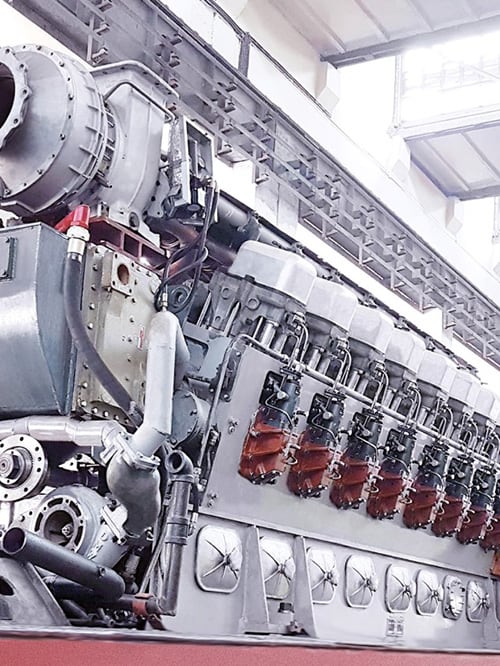
Technology companies such as Accelleron have already invested in the developments needed for the transition, and today's propulsion systems are, more or less, ready to burn e-fuels. Through Christoph Rofka's work at Accelleron and his role at the International Council on Combustion Engines (CIMAC), Accelleron contributes thought leadership on how fuel production, port strategy, and engine technology must come together to accelerate shipping's path to net zero.
Download the full Accelerating to Net Zero reports here: https://accelleron.com/about/accelerating-to-net-zero