







Accelerating to Net Zero, from technology to implementation
The Accelerating to Net Zero series explores how shipping is moving from decarbonization ambition to execution. Bringing together operators, technology providers, and industry leaders, the series focuses on how decisions made today shape real-world decarbonization across fleets.
Episode 5: Giuseppe Gargiulo, Head of New Building, MSC
What roles do retrofits and newbuilds play in reducing emissions across the fleet?
MSC’s approach combines newbuild design with continuous upgrades to the existing fleet, using retrofit as a primary lever to improve efficiency and emissions performance.
“Retrofit is a very, very powerful tool. We started very early with huge changes to the bulbous bow and propeller, we reduced the speed of the vessels, and we cut the CO₂ up to 40% on some vessels.”
“Retrofit nowadays is as important as the newbuilding program because you can bring the vessel to the current state of the art in terms of efficiency.”
“We are trying to take the continuous improvements we have in newbuilds and apply them to the existing fleet as well.”
Where have retrofit measures delivered the biggest emissions cuts so far?
Early design changes and operational adjustments have delivered significant gains, particularly through speed reduction and hull optimization.
“We started to reduce the speed of the vessels and use different designs of propellers and bulb, and this has given great results.”
“We moved from 24 to 25 knots to 18 or 19 knots maximum, and this is making a huge difference.”
Rather than focusing on a single component, MSC looks at vessel performance as a system, combining technical upgrades with operational improvements.
“When we talk about retrofit, we have to talk about the whole picture. This includes propulsion, hull coating, the exposure of the vessel to the wind, and also how we carry the cargo.”
“We cut the CO₂ by more than 40%, depending on the starting point and how the vessels are built.”
How are you approaching fuel choices today while preparing for future carbon-neutral fuels?
MSC is pursuing a flexible strategy, investing in available fuels today while ensuring vessels can adapt to future options.
“Our approach is very aggressive, and we are trying every possible scenario available on the market.”
LNG plays a central role as a scalable, immediately available solution.
“We are investing a lot in LNG vessels, and from the moment they start, we cut the CO₂ by over 25% compared to conventional fuel. In the future, we can also use bio-LNG or green LNG, and this will make a big difference because the infrastructure is already in place.”
“At the same time, we are making those ships ready for future fuels like ammonia or methanol. This is an extra investment, but we are doing this to make sure we are ready when the market is ready.”
How do you think about fuel choices across different regions and trade routes?
Rather than committing to a single fuel pathway, MSC expects fuel use to vary by region, depending on local availability and infrastructure.
“For years, we have been studying what could be available on the market, speaking with scientists, engine makers, and shipyards.”
“We do not see the future fuel as a single fuel, but as a variety of fuels available in different places. You cannot force a fuel into a region, because you have to consider the full picture.”
How are data and connectivity supporting your efforts to improve efficiency and reduce emissions?
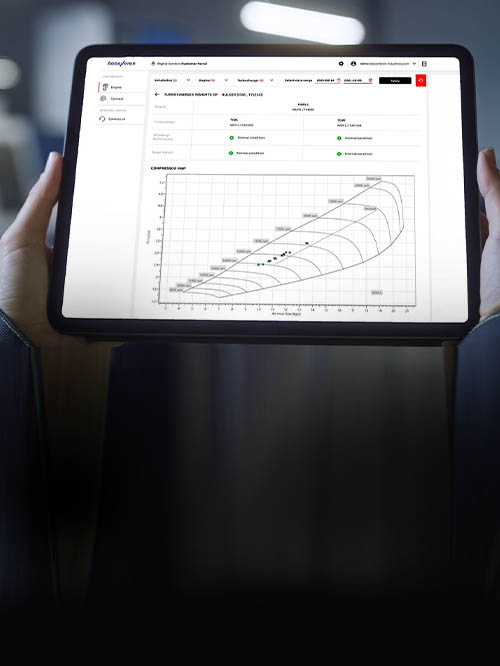
Digital tools enable real-time monitoring and faster decision-making, allowing operational improvements to be implemented immediately.
“Digitalization is key because it gives us the data and the possibility to act immediately. We have all our vessels connected, and we monitor what we are doing on the spot. This allows us to correct immediately what is not going in the proper direction.”
Data is used not only for tracking performance, but to continuously refine how vessels are operated and maintained.
“We already have systems that allow us to monitor fuel consumption on the spot. We are going through each component of the vessel and we can see where we can improve.”
“We can really save down to the last gram of fuel.”
How are you supporting your cargo customers in reducing emissions today?
MSC’s focus is on delivering what is achievable today, using available technology rather than relying on future assumptions.
“We are giving them the state of the art available today and the best consumption and emission profile possible. We are a very pragmatic company and we work on the technology available today. We do not promise something we cannot deliver.”
“The absolute CO₂ per container transported is drastically reduced.”
Download the Accelerating to net zero reports here: https://accelleron.com/about/accelerating-to-net-zero