





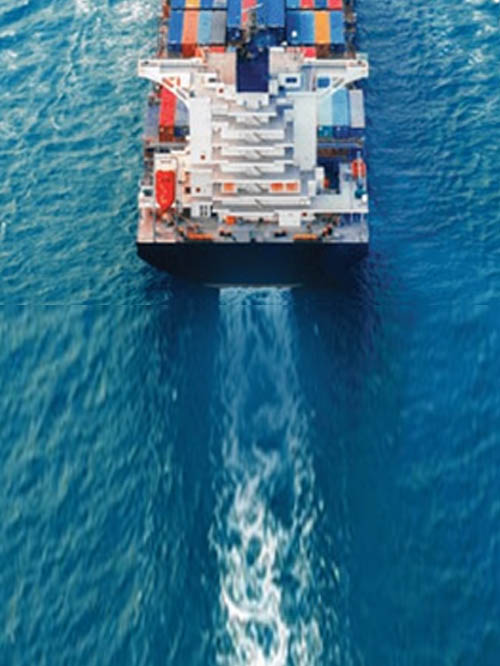



It takes a fully digital ship to be fully autonomous, says Cristian Corotto, President of Accelleron’s Digital Division. The owner of a classic Fiat 500 can’t expect their car to be autonomous; it wasn’t built with the digital systems needed. It’s the same for ships, but for many shipowners, there are degrees of autonomy that can provide benefits, even for older assets.
The key is building the data fundamentals that will enable semi-autonomous operation so new technologies can be adopted as they become available. Maritime operations are already complex, and success demands an intelligent approach, Corotto says. The technology already being developed for autonomy offers many solutions, including greater support for watchkeepers, streamlined regulatory reporting for crew and shoreside personnel, and monitoring and maintenance strategies that improve machinery reliability and safety.
There is also scope to reduce fuel consumption using smart autonomous systems to analyze data on engine performance, fuel usage, and environmental conditions to optimize voyage routes.
These advances are all predicated on trust.
The AI algorithms involved in autonomous systems must perform optimally in varied and sometimes unpredictable situations. Their results must be explainable, their limitations understood, and their decisions capable of being overridden if needed. Therefore, the role of the human-in-the-loop is not that of a passive observer, says Corotto, it’s a leadership role, and they need to be able to trust their technology “team.”
Evolving roles
“The development of technology supporting greater autonomy is not the main challenge; that is already moving ahead fast. Captains and crews, like all of us, will have to adapt to a new style of working,” says Corotto. “It is particularly critical for captains, as they are the focus of liability claims when things go wrong. At sea, they are responsible for the safety of the crew, cargo, and ship.”
For deep-sea shipping, that responsibility is not likely to disappear in the near future. Full autonomy is decades away, and captains are still responsible in semi-autonomous scenarios. “You as captain are responsible for the ultimate decision-making; semi-autonomous operation could and should provide the support you need to make your life easier.”
Five data fundamentals
The fundamental role of data becomes paramount when considering human-centric autonomy. For Corotto, the most important considerations can be summed up in five words: frequency, quality, standardization, connectivity, and security.
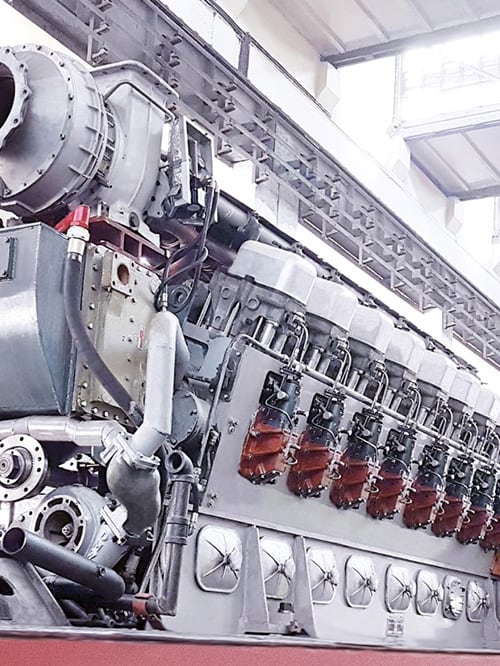
While large two-stroke engines might only need optimization of their running parameters once a month, safety-critical navigation systems cannot suffer delays and need instantaneous updates from a range of sensors and cameras. “Depending on the operation, data can come from many sources, and shipowners looking to the future need to consider how scalable their data processing architecture is both onboard and ashore to handle high-frequency updates,” says Corotto.
Raw data is largely unstructured and can be confounded by sensor malfunctions. It must therefore be ‘cleaned’ of errors as much as possible before it can be used with confidence. Data standardization is also critical to ensuring interoperability of data from different systems.
Next is the need for reliable, scalable communication between ship and shore, supporting semi-autonomous functionality and decision-making. Bandwidth and intermittent connectivity at sea can often be limiting despite advances in cloud-based processing, so the potential for edge computing onboard is increasingly being considered for real-time data processing. Both have architecture requirements.
Cyber security is a major consideration from the edge to shore, so autonomous systems must be supported by safe data pipelines to ensure integrity and guard against tampering.
The LOREKA360° advantage
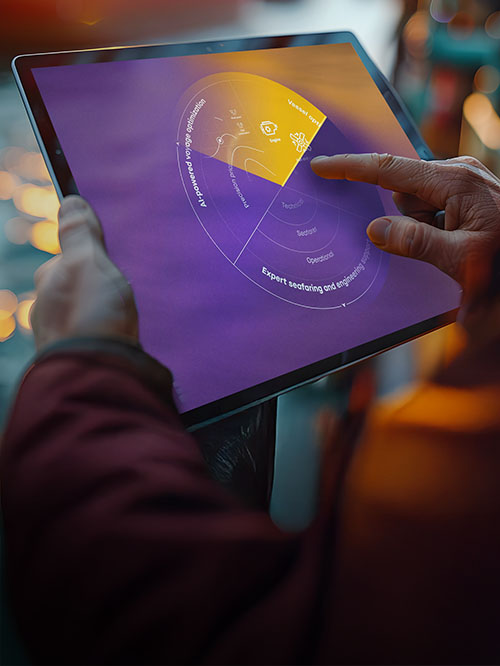
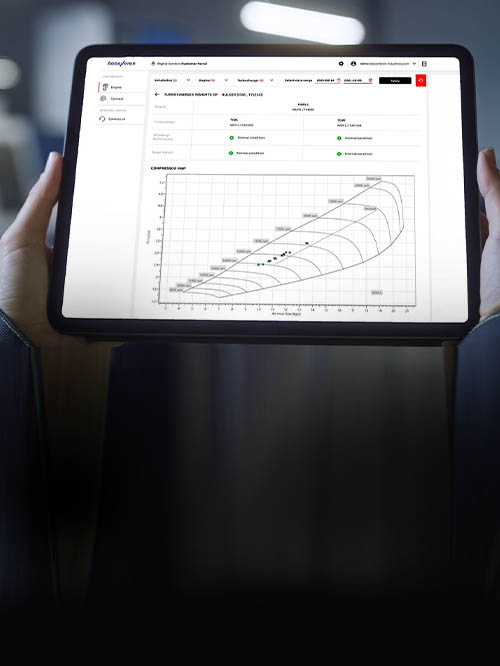
Accelleron’s LOREKA360° solution addresses all these data issues. LOREKA360° unites advanced vessel optimization, AI-driven voyage planning, and expert-led seafaring, operational, and technical consultancy in a single, powerful platform. Data-led performance analytics are backed by expert-led guidance. Regardless of their autonomy journey, LOREKA360° is already empowering shipping companies to anticipate challenges, adapt strategies, and make informed decisions, says Corotto.
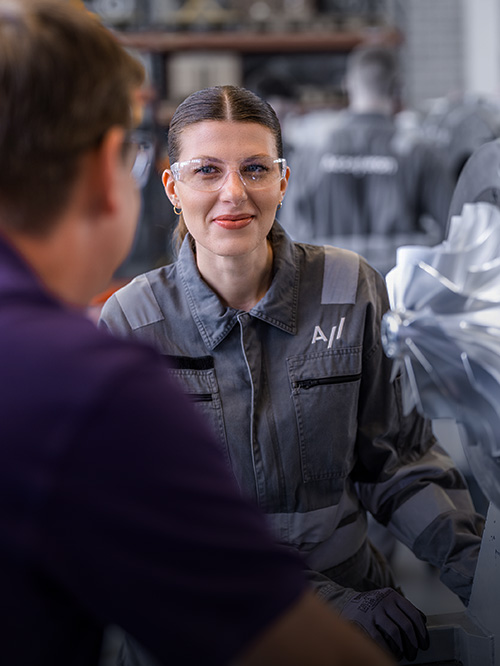
“LOREKA360° is fully compatible with high frequency data. We are covering any kind of vessel that requires manual or semi-manual intervention, but we also have systems that are compatible with any data provider and any frequency of data from monthly to seconds. We clean the data, we understand the data through our expert team, and we translate the data to provide more intelligence to crews so they can be more efficient.”
LOREKA360° has industry-leading cyber security capabilities, but Accelleron also offers a whole-of-ship solution that protects multiple systems and data channels.
Meeting the challenges ahead
“As autonomy expands in scope, so will the need to trust the data, so the data fundamentals need to be addressed. It’s a big challenge today even for secure data, because any sensor in the engine room can be impacted by temperature, humidity, noise,” says Corotto. “There are lots of anomalies in sensor data, and of course humans can read the manuals and recognize there is an error there. We replicate that by filtering and understanding correlations between different data points so we can detect and try to correct anomalies, but I don’t see any easy solutions to that challenge moving forward, even with a smart ship.
“Any system will need the skill of the crew to maintain the quality of the data generated by a smart ship so that it is of high enough standard for supporting decision-making. It’s a major challenge for the industry, not just us.”
Going forward, Accelleron will be introducing Lori – an AI agent to LOREKA360°. Lori will enhance communication and decision-making by being able to answer questions and suggest action to be taken. It’s part of Accelleron’s push to support the increasing role of semi-autonomous operations.
“We offer technical depth and commercial intelligence, so shipping companies can make the right investment at the right time. For semi-autonomous operation, we will be there to support them, but we don’t want to substitute the knowledge of our clients, we want to simplify it and make sure it is the right information at the right time – we want to become their copilot for future success.”
Top 5 questions
Why is data becoming central to the development of semi-autonomous shipping?
As ships incorporate increasing levels of automation and decision-support systems, operational decisions rely more heavily on data generated by onboard sensors and digital systems. Reliable data is essential for safe operations, efficient performance management, and regulatory compliance.
How can shipping companies prepare their fleets for semi-autonomous operations?
Shipowners must establish strong data management foundations that ensure data can be collected, transmitted, processed, and interpreted effectively. This requires investment in digital infrastructure, standardized data formats, and secure connectivity between ship and shore.
What measurable benefits can reliable data deliver?
Reliable and standardized data can be fed into digital tools that output insights and advisories to improve operational efficiency, reduce fuel consumption, enhance predictive maintenance strategies, and streamline regulatory reporting. These benefits translate into lower operating costs and improved vessel reliability.
How does the human role evolve as autonomy increases?
Even as automation expands, human expertise remains essential. Captains and crews retain ultimate responsibility for decision-making and safety, using digital systems as advanced decision-support tools rather than replacements for human judgment.
How does Accelleron support shipowners in building these data capabilities?
Accelleron’s LOREKA360° platform integrates vessel performance analytics, expert advisory services, and AI-driven insights to transform operational data into actionable intelligence. This helps shipowners manage performance today while preparing for higher levels of autonomy in the future.