






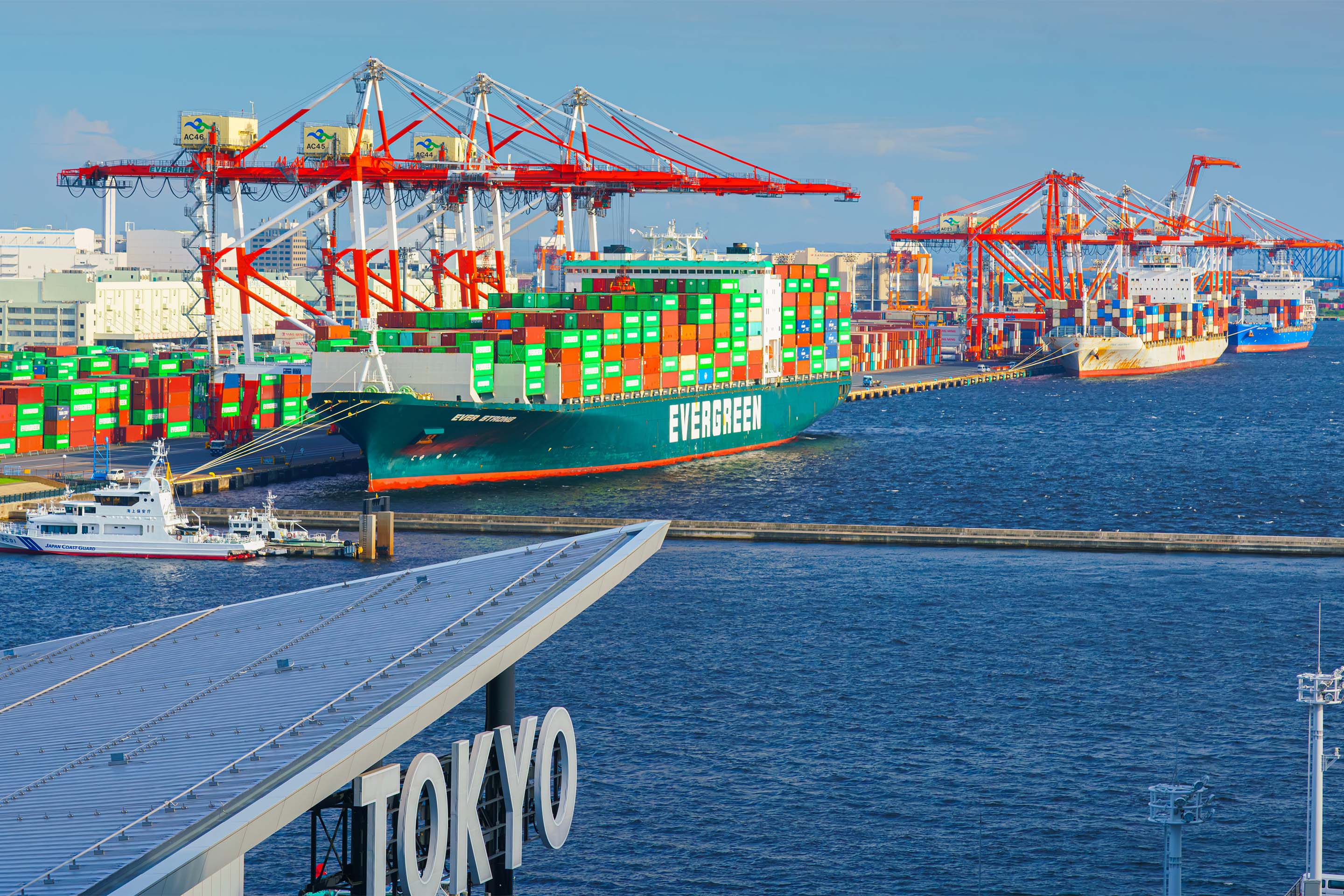


Home to shipowners including Mitsui, NYK, and K Line, the bustling megacity of Tokyo is the fourth largest shipping city in the world. Tokyo-based companies own half the nation’s fleet and dominate globally in gas carriers. Other cities such as Imabari add to the nation’s shipowning power with their leading role in bulk and container markets.
Last time Cristian Corotto, President of Accelleron’s Digital Division, was in Japan he sensed a new energy in the people living and working there. “I've been in Japan many times, but now is a particularly interesting time. Something is moving. Our customers are more active, more open to discussion, and more focused on innovation. There has been a big push from the government for decarbonization, and owners are responding, carefully examining the technical solutions available in the market.”
Regional leadership
Key findings from Accelleron’s latest Accelerating to Net Zero report reveal that while the recent postponement of the IMO’s Net-Zero Framework has caused uncertainty within the shipping industry, the drive for maritime decarbonization across the Asia-Pacific continues at pace. A driving force behind this is the region’s view of green hydrogen and e-fuels as a pillar of both decarbonization and long-term, cross-sector energy security.
Major economies in the region, including China, Japan, Korea, and Singapore, depend heavily on imported oil and gas and cannot meet their energy needs from domestic reserves alone. For these countries, green hydrogen-based e-fuels offer a path to reduce exposure to external fossil supply and a way to secure more resilient, regionally anchored energy as the transition accelerates.
The region boasts some of the world’s most extensive renewable energy and industrial resources to stimulate green hydrogen and e-fuel production. Several countries are already developing “book and claim” systems to overcome early gaps in e-fuel distribution infrastructure, while smaller-scale, modular e-fuel production models are emerging that enable incremental buildout and accelerate early supply.
Digital collaboration
Corotto was instrumental in sealing a deal with Seawise that will make Accelleron’s digital solutions LOREKA360° and Tekomar XPERT Engine available as optional features on Seawise’s vessel data platform, swDPF.
Seawise was established in 2022 as a joint venture between Japan Data Science Consortium, Mitsui & Co., and Tsuneishi Shipbuilding. The company leverages vast amounts of vessel data to deliver operational analytics to shipowners, shipyards, charterers, and cargo owners. Its swDPF platform offers both proprietary and third-party software in a software-as-a-service format that fosters collaboration through an open platform architecture.
The company’s goal is to support global shipping through the current unprecedented period of change. Tighter environmental regulations, rising fuel costs, and diversifying ship specifications require more sophisticated and agile decision-making. However, information and systems are often fragmented, so problems such as rising costs, the burden of paperwork, and increased operational risks are apparent.
With overlapping emissions frameworks and increasing enforcement, shipowners face more regulatory pressure than ever - from the IMO’s DCS and SEEMP II&III mandates to the EU’s MRV and ETS, along with growing regional requirements, says Corotto. LOREKA360° Emissions Desk provides the expert support, software, and strategies needed to meet compliance standards, without added burden for crew or office teams.
“Depending on where vessels sail, and which fuels and technologies they employ, the complexities in technical and commercial management can become exponential,” says Corotto. “We can take away some of the workload. Our digital solutions let shipping companies focus on what really matters in their business. They can give us the data, and out of the data we give back recommendations and solutions. We also take care of the reporting and send validated data automatically to class societies such as ClassNK.”
Comprehensive technology
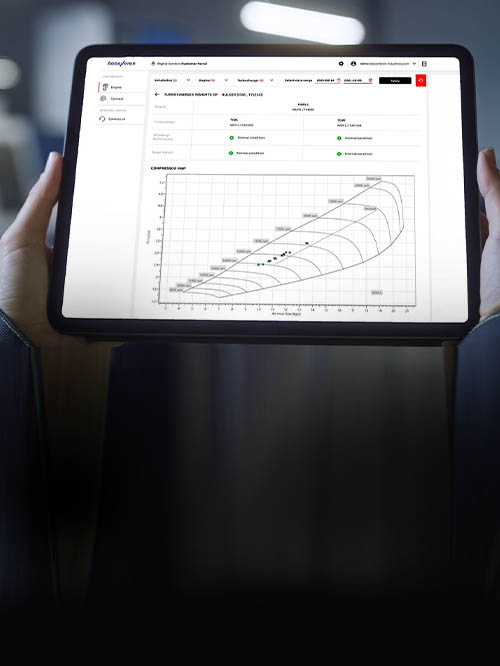
Tekomar XPERT Engine provides engine monitoring and troubleshooting services to chief engineers onboard and to superintendents onshore. Engineers enter detailed engine data such as engine speed, cylinder pressure, turbocharger speed, and fuel viscosity on a monthly basis, as they would already otherwise do using spreadsheets. The data is automatically quality assured, highlighting potential input errors or inconsistencies before it is analyzed and graphed at cylinder, engine, vessel, and fleet level.
Superintendents can collate and condense engine performance data across the fleet or drilldown to see details for each engine. Engineers are presented with a visualization of each engine’s optimization potential on a thermodynamic model, with the potential for fuel savings quantified. The analysis is based on experience from over 6,000 engines and includes data and action suggestions for each engine cylinder and other components such as turbochargers and fuel injection systems. Unlike many other high-performance engine troubleshooting tools, Tekomar XPERT is independent of OEMs and supports all European and Asian 2- and 4-stroke engine types.
Continuity and trust
Accelleron has a long history of operations in Japan dating back to 1958, and in 1998 the company established Turbo Systems United, a joint venture with IHI Corporation. Corotto stresses the importance of continuity, as Accelleron partners with Japanese shipping companies to support their digitalization and decarbonization journeys. “We're not a company that is in and out. We know the customers. We trust them, and they trust us.”
Japan’s shipping and shipbuilding industries have faced challenges from competitive neighbors and an aging workforce, but the government is building its sustainability vision by aiming to become a leader in the construction of autonomous and zero-emission ships by 2040. It is focusing on innovation to enhance vessel performance and to boost profitability.
“We definitely have something interesting to offer when it comes to the technologies needed for shipowners to realize these goals, but to be successful, collaboration between multiple parties is needed. Nobody can do it alone,” says Corotto. “We are able to complement what Japan is doing, bringing the knowledge that we have from our side and connecting it through digital solutions like LOREKA360°. It is exciting to see how well it is meeting their needs.”