






As meeting points for multiple hard-to-abate sectors, including shipping, energy, steel, and cement, ports are uniquely positioned to enable the transition to carbon-neutral fuels. A new report from Accelleron argues that aggregating cross-sector demand for green hydrogen, the key feedstock for hydrogen-derived fuels like e-ammonia and e-methanol, is one of the most effective ways to secure future fuel supply. Ports, as nexus points for those sectors, can play a vital role in driving that cross-sector effort.
The report, entitled Deadlock: What’s stopping shipping’s carbon-neutral fuel transition?, identifies four port archetypes in a future hydrogen-based e-fuel economy based on several criteria, including proximity to renewable resources, land availability, grid and industrial infrastructure, and strategic trade advantages.
These four archetypes are not rigid categories, but rather illustrate different strategies that ports can adopt to leverage their natural strengths in the early development of the carbon-neutral fuel supply chain. The different archetypes can be illustrated by examining how several progressive ports are already positioning themselves in the emerging global carbon-neutral fuel market.
A tale of four ports
The report highlights four case studies from around the world, covering Europe, South America, Asia, and Australia, and representing ports with different cargo profiles, trade patterns, and throughput volumes. As a result, each port occupies a very different position in the emerging carbon-neutral fuel market.
The common denominator is that each port has identified a specific strategic role early, allowing it to plan focused investments and infrastructure development to support its position in a future carbon-neutral fuel bunkering market. That long-range vision supports both the success of each port and the wider energy transition.
The ports of Rotterdam and Singapore, familiar to many in the shipping industry as key global bunkering hubs, are the most similar at first glance. Both are important stops on major global maritime routes and have already made sizeable investments to support carbon-neutral fuel bunkering. Both are also highly experienced in handling and trading large volumes of fuels and chemicals.
However, a closer look reveals two important differentiators: land availability and proximity to renewable resources.
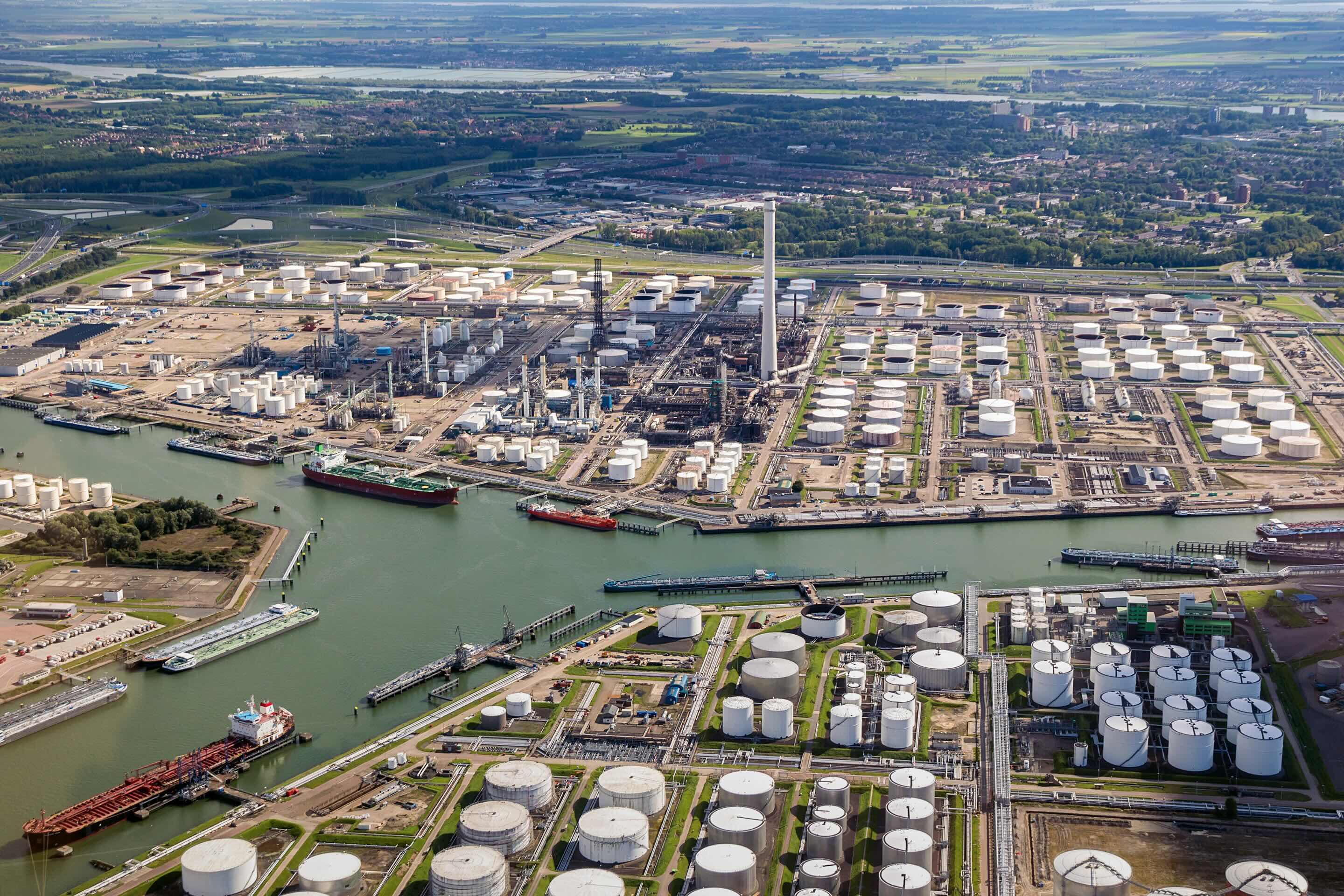
Rotterdam’s strength lies in its proximity to major European industrial clusters and its extensive energy distribution network. It sits close to several planned hydrogen production and import corridors, while its location at the mouth of the Rhine delta gives it unmatched access to inland industrial clusters. Combined with an extensive petrochemical pipeline network that could potentially be adapted for hydrogen transport, Rotterdam represents an archetypal connector port, able to act as a critical intermediary between renewable-rich regions and major industrial demand centers.
Singapore’s potential role as a green hydrogen hub is built on a very different premise. Rather than acting primarily as an energy distributor, it is a specialized importer, with more than 95% of the city-state’s energy requirements having to be brought in from external markets. That makes advanced logistics crucial. At the same time, the port’s role as the world’s busiest bunkering center means it is already geared to serving the shipping market. Singapore’s capabilities in energy imports and bunkering position it as a classic receiver port for green hydrogen and its derivative fuels.
Getting to the source
Not all ports have the logistics advantages of Singapore or Rotterdam. However, for ports located close to abundant renewable energy resources, another archetype may be a more suitable model. Take, for example, Port Bonython in southern Australia, which is currently being developed as a large-scale green hydrogen and derivatives export hub.
Drawing on South Australia’s exceptional wind and solar potential, Bonython could become one of the lowest-cost locations globally for green hydrogen production. With expansive land availability for industrial-scale electrolysis and ammonia production around the port premises, Bonython is being designed with exports in mind, with purpose-built maritime facilities tailored to large-scale green hydrogen and ammonia shipments. It represents the archetype of a source port.
Even without immediate proximity to renewable energy sources, or extensive connections with export markets, ports may still be able to act as aggregators of local industrial demand for carbon-neutral fuels. Such producer ports epitomize the cross-sector collaboration needed to scale up new fuel availability. By deploying nearby renewable resources to host production of the fuels on-site, they can attract hard-to-abate industries while also offering bunkering. In doing so, they effectively create their own carbon-neutral fuel ecosystem.
The Port of Açu in Rio de Janeiro is a case in point. Established in 2014 for iron ore and oil exports, it is now emerging as one of Latin America’s largest hubs for low-carbon hydrogen and its derivatives. With exceptional solar resources and vast land availability, Açu is already planning multiple ammonia production projects. That development is backed by several land reservation agreements from industrial users keen to use ammonia. These include fertilizer producers serving local agriculture, potential green ammonia exports for shipping, and industrial demand abroad.
Playing to strengths
In each case, these archetypal ports, a source, a producer, a connector, and a receiver, play to their individual strengths to forge a role in the maritime and wider energy transition. Few ports will have the same set of geographical or commercial circumstances. However, if the march to net zero is to succeed, many more will need to consider the advantages they can leverage to play their role.
The port archetypes developed in Accelleron’s report provide a practical framework that can help ports identify where they can contribute most effectively to scaling the carbon-neutral fuel supply chain.
To read more about the port archetypes and the role of ports in scaling up carbon-neutral fuel availability, download Deadlock: What’s stopping shipping’s carbon-neutral fuel transition? here.