









Shipping’s move to net zero emissions will rely on lower carbon and carbon-neutral fuels. For ship engines to burn these fuels – including LNG, methanol and ammonia – dual-fuel systems are needed, allowing engines to run on these as well as conventional marine fuels. As the energy transition in shipping continues under evolving regulatory and market conditions, the performance of critical components such as fuel injectors is increasingly critical to ensure reliability, stability, and fuel flexibility, as well as efficient combustion across fuel types.
Accelleron is supporting this development by progressing targeted investments to strengthen its advanced fuel injector capabilities and related production capacities.
In 2023, Accelleron acquired Turin-based OMT, a leading designer and supplier of injection systems in the marine sector. This was followed in 2024 by the acquisition of OMC2 in Brescia, which contributed additional manufacturing capacity that can be further increased through the use of existing space and investment in new machinery.
These acquisitions have expanded Accelleron’s business portfolio by adding fuel injection as a new segment to its existing turbocharger business.
Building on this foundation, current investments include a new technology center in Turin, which will offer more than 1,200m² for testing, assembly, and prototype production, along with office space for 100 employees.
In addition, OMT is investing in increased space and capacity at its factories in Turin and Brescia.
What makes fuel injectors critical to dual-fuel engine performance?
Underpinning the new facilities and extra staff are the technical developments necessary to meet increasingly complex performance requirements of dual-fuel engines.
Although the existing capacity is sufficient for conventional single-fuel systems, the complexity of injection systems for transitional and future carbon-neutral fuels, coupled with the need for precise combustion control across fuel types, means that investments to accelerate development and increase production are essential.
“Fuel injection is central to how efficiently and reliably an engine operates,” says OMT CEO Klaus Heim. “With dual-fuel engines, the injector becomes the control point for combustion across very different fuels, each with its own properties.”
“Multi-fuel injectors require more subcomponents made from special materials,” adds Heim, “which leads to more complex manufacturing processes that require more machining time than single-fuel injectors.”
“It’s critical to be able to meet customer demand with short lead times,” says Heim, “while ensuring consistent performance across fuels, and maintaining combustion efficiency under varying operating conditions.”
OMT’s investment in new machines and technology facilities, as well as increased manufacturing shifts, supports those goals.
Why are fuel injectors central to carbon-neutral fuel adoption?
Investment has also been made to address the specific challenges of fuels such as ammonia and methanol due to their safety-related requirements. Both fuels are aggressively corrosive, which dictates the choice of materials to be used, and the injectors must be leak-free because of their toxicity.
With 10 research and development programs in progress to provide customers with suitable systems for those fuels, OMT is also building out its R&D team. Current innovation builds on work done over the past two years to understand how future carbon-neutral fuels behave compared with traditional diesel oil. OMT’s new Turin technology center will provide additional space to expand and accelerate these R&D activities.
Engine makers have also been on the same journey towards understanding the impact of these fuels, leading to increased collaboration between Accelleron, OMT and OEMs, along with several universities, to develop suitable technology at pace.
Fuel injectors are the engine components that are most affected by the move to transitional and future carbon-neutral fuels, says Heim, so they are “in the eye of the tiger” when it comes to prioritizing developments in the face of future fuels. In this context, he notes, OMT’s increased R&D capacity and expanded manufacturing plant will be transformational not only for OMT and Accelleron, but for the shipping industry’s move to carbon-neutral fuels, ensuring engines can operate efficiently and reliably as fuel pathways evolve.
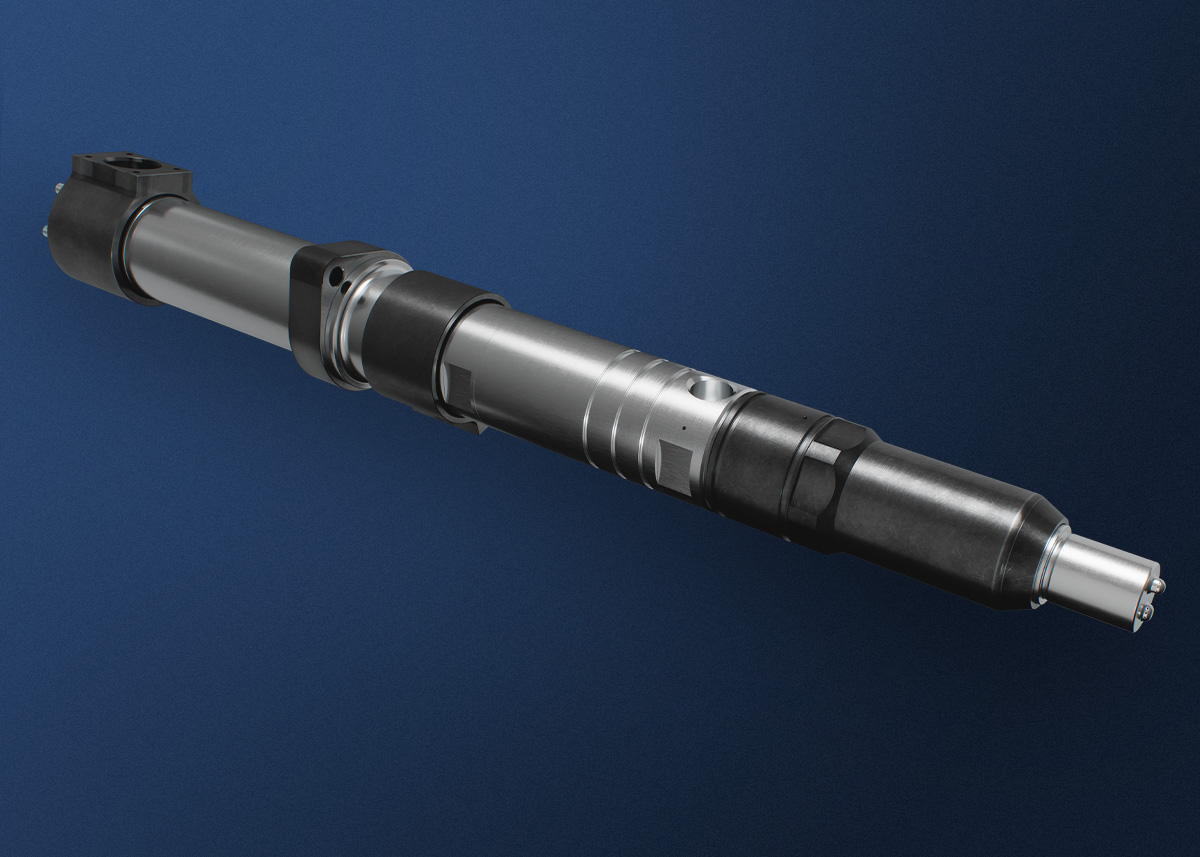 OMT's ammonia fuel injector Cameo
How are injector technologies and services evolving to support decarbonization?
Fuel injection spare parts have traditionally been seen as disposables: if they are worn out, they are swapped for a new one. But this may change in the future. With transitional and future carbon-neutral fuels calling for more sophisticated and more expensive injectors, re-manufacturing will become an increasingly interesting option.
Heim expects that onboard support and training to service advanced injector designs will be provided by engine designers and builders, who already provide extensive training courses for their engines. This includes guidance on fuel injection equipment.
OMT can provide that advanced training with technical service and support workshops in South Korea and China, staffed by OMT service engineers. They can support engine makers and shipyards during shop tests and sea trials, and can address any challenges they encounter when they run engines on ammonia or methanol for the first time.
What role will digital injectors play in next-generation engine performance?
Heim described how a new digital injector from OMT will help to further optimize fuel injector operations, including reducing maintenance and fuel consumption.
It incorporates a small sensor close to the injection nozzle that is able to provide data to monitor the injector operation, for example to check that it opens at the right time and at the right speed. This will confirm whether the fuel is being properly atomized, which is crucial for an engine’s performance and overall efficiency.
The sensor will also detect failures, such as a broken nozzle tip or a stuck needle, and provide an immediate alert to a ship’s engineers so that they can exchange the nozzle.
For now, says Heim, engine companies and their customers are concentrating on transitioning to future fuels more than on digital functionality. But once their focus shifts to monitoring their fuel systems, “we are ready with the right technology.”