



Asia Pacific illuminating cross-sector e-fuel pathways to advance maritime decarbonization
Press release | Shanghai, China | Dec 3, 2025
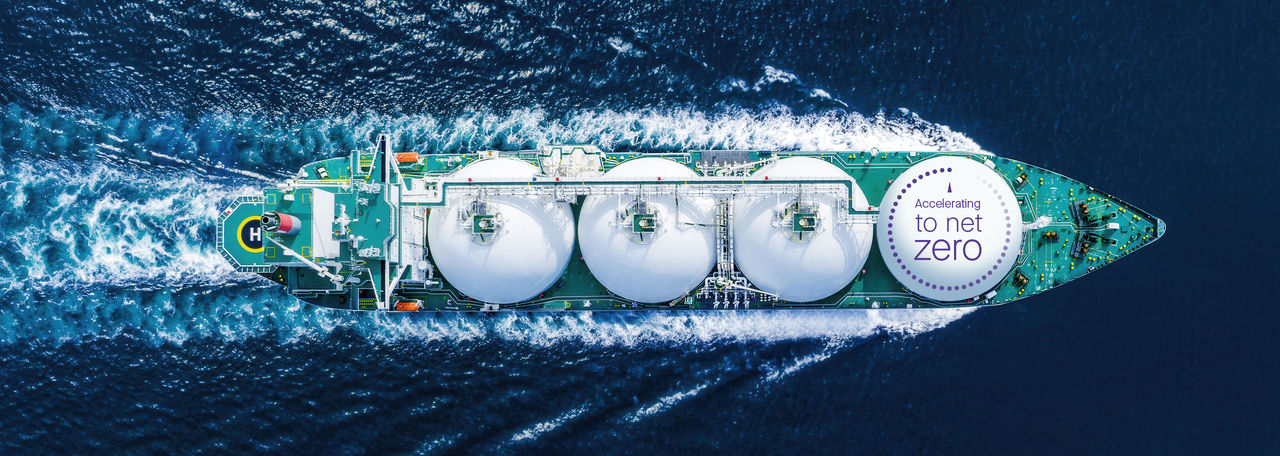
New Accelleron report highlights Asia Pacific’s emerging role in demonstrating how green hydrogen-based e-fuel networks can be built, connected and scaled.
Accelleron, a global technology leader in turbocharging, fuel injection, and digital solutions in the marine and energy industries, today released its second report in its Accelerating to Net Zero series, highlighting the Asia Pacific market's critical role as the proving ground for much-needed e-fuel networks.
“The ships are ready. The net-zero technology is ready. The fuels are still missing,”
said Daniel Bischofberger, Chief Executive Officer at Accelleron.
“Our customers are preparing ships to run on e-ammonia and e-methanol, and there is broad agreement that green hydrogen-based e-fuels will be essential for reaching net-zero. Even with delays to global net-zero regulation, progress is visible. We wrote this report to bring clarity to that progress and support the industry with evidence it can use. Developments in Asia Pacific show green hydrogen and e-fuel infrastructure beginning to take shape in ways that could inform similar efforts in other regions.”
With the economic scale and distinctive political environment to support early progress in green hydrogen and e-fuel development, the Asia Pacific region has emerged as an advanced testbed for these systems.
Key findings from the report reveal that while the recent postponement of the International Maritime Organization’s Net-Zero Framework has caused uncertainty within the shipping industry, the drive for maritime decarbonization across the region continues at pace.
A driving force behind this progress is Asia Pacific’s view of green hydrogen and e-fuels as a pillar of both decarbonization and long-term, cross-sector energy security. In addition, the region boasts some of the world’s most extensive renewable energy and industrial resources to stimulate green hydrogen and e-fuel production. Several countries are already developing “book and claim” systems to overcome early gaps in e-fuel distribution infrastructure, while smaller-scale, modular e-fuel production models are emerging that enable incremental buildout and directly accelerate early supply. Targeted government supply-side incentives support that acceleration by reducing costs across the e-fuel value chain.
These conditions create a strong cross-sector foundation for e-fuel production, matched by a natural upstream/downstream supply/demand dynamic for e-fuels that is unparalleled in other regions around the world. Asia Pacific is actively demonstrating how the critical elements of a future e-fuel system can operate together and across sector boundaries, linking ports, industrial clusters and bunkering infrastructure.
Despite this progress, maritime demand for e-fuels is currently not high enough to mobilize production at the scale required to decarbonize the sector. Why?
Accelleron’s report identifies vital deadlocks still to be overcome to accelerate missing e-fuel demand, as well key points that the global market can take from developments in the Asia Pacific region.
This includes:
Viable ecosystems don’t need a global regulatory trigger. The Asia Pacific market has shown that if national governments and industry formalize cross-sector programs that link port development, green hydrogen and e-fuel production clusters, industrial offtakers, and maritime demand, early ecosystems can progress in advance of global regulatory alignment.
Inter-country harmonization. National energy agencies and port authorities can accelerate progress by harmonizing cross-sector hydrogen and e-fuel strategies, certification, storage, handling, and bunkering development with neighboring countries, so that regional supply and demand flows are strengthened.
Leverage existing cross-sector trade corridors. Governments, ports, and industry can use existing high-traffic trade corridors, like the Australia-Singapore-China iron route, as the backbone for early e-fuel deployment, coordinating fuel availability, bunkering readiness, cross-sector offtake, and shipping use along the same routes.
Think small to aim big. The Asia Pacific market reveals that smaller scale, modular production concepts – linking renewable power, storage, electrolyzers, and ammonia or methanol synthesis in integrated units – can build out incrementally to supply cross-sector offtake. This allows for smaller upfront offtake commitments, accelerating early market formation.
Get the other half of the job done: generating demand. In contrast to the wealth of cross-sector, supply-side incentives for green hydrogen and e-fuel production and infrastructure, maritime carbon pricing and demand-side incentives for e-fuels are virtually absent across the Asia Pacific region, signaling a clear expectation that these must come from global maritime regulation.
Allan-Qingzhou Wang, Chairman of Accelleron China, concluded:
“Our first Accelerating to Net Zero report highlighted the central role that green hydrogen–based e-fuels will play in shipping’s energy transition. This new report shows how that transition is beginning to take shape on the ground. Across Asia Pacific, different approaches to early e-fuel development are emerging, offering evidence of how e-fuel networks can develop in practice and laying the foundations for future scale-up."
Download the full report:
https://accelleron.com/about/accelerating-to-net-zero/download
Accelleron is accelerating sustainability in the marine and energy industries as a global technology leader in turbocharging, fuel injection, and digital solutions for heavy-duty applications. Building on a heritage of over 100 years as a trusted industry partner, the company serves customers in more than 100 locations in over 50 countries. Accelleron’s 3,000 employees are continuously innovating to deliver best-in-class products, services, and solutions that are mission-critical for the energy transition.